The Spiritual Significance of Lighting a Diya (Oil Lamp)
Discover the profound meaning behind lighting a Diya in Hindu homes and how this simple daily ritual dispels darkness and invites divine grace.
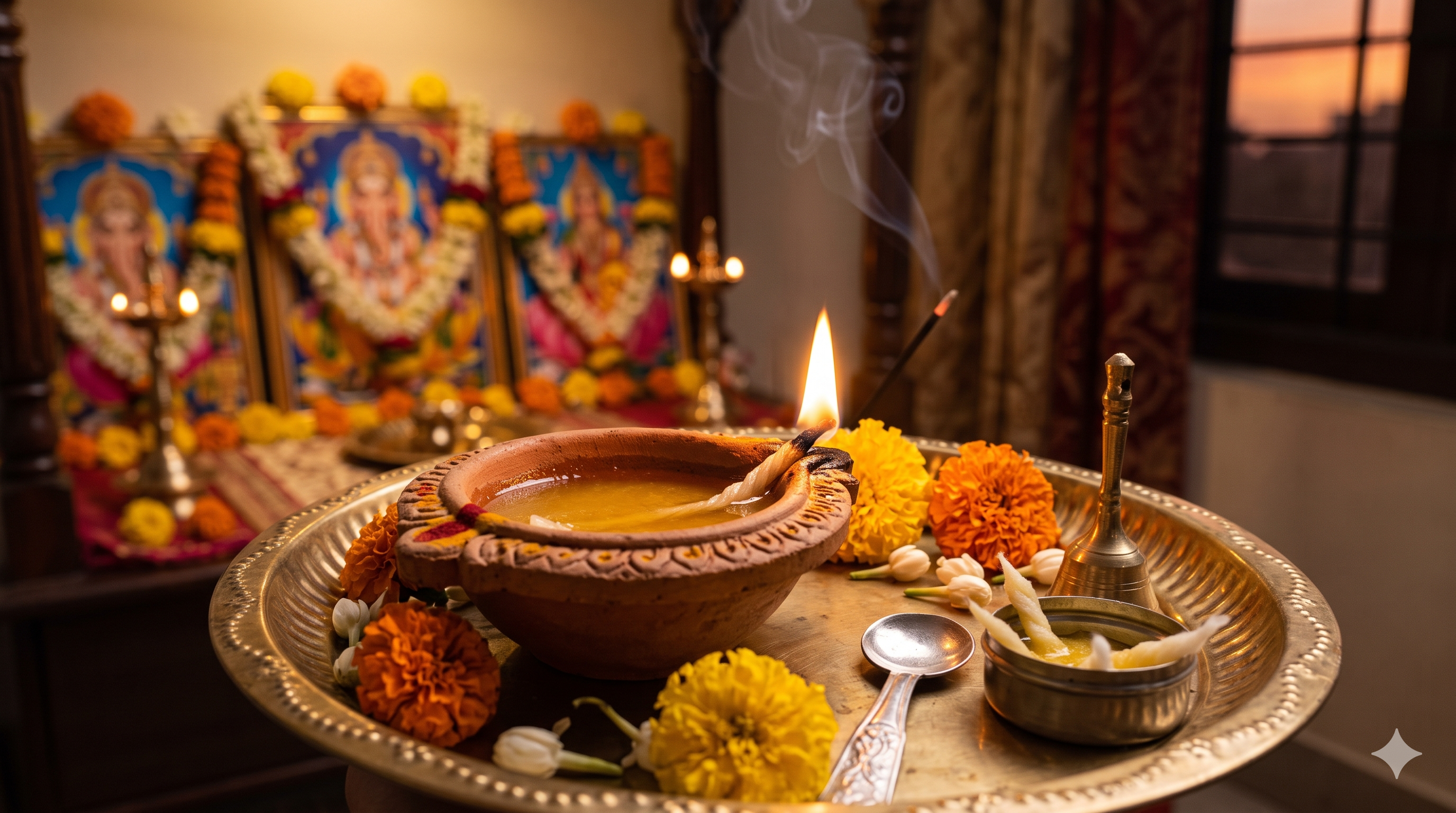
In almost every Hindu home, the day begins and ends with a simple yet profoundly beautiful ritual: the lighting of a Diya (oil lamp). Whether placed on a grand temple altar or in a small corner shrine, the gentle flicker of the diya is a universal symbol of peace, purity, and the presence of the divine.
The Deep Symbolism of the Diya
Every component of the traditional lamp carries a specific spiritual meaning, creating a perfect metaphor for human existence and spiritual liberation:
- The Clay Lamp (Mitti) – Represents the physical body, forged from the earth.
- The Oil or Ghee – Symbolizes our negative tendencies, ego, and worldly attachments (vasanas).
- The Cotton Wick (Bati) – Represents the self (atma) or human consciousness.
- The Flame (Jyoti) – Stands for spiritual knowledge, enlightenment, and the supreme divine.
As the flame burns upward, it slowly consumes the oil (ego and attachments). Once the oil is completely burned, the wick is extinguished. This teaches us that as we kindle the flame of spiritual knowledge, our ego is slowly depleted, ultimately leading to liberation (Moksha).
Why Do We Light a Lamp Daily?
Light is universally acknowledged as the symbol of knowledge, while darkness signifies ignorance. The Lord is the "Knowledge Principle" (Chaitanya) who is the source, the enlivener, and the illuminator of all knowledge.
Therefore, lighting a diya is bowing down to knowledge as the greatest form of wealth. The traditional prayer chanted while lighting the lamp perfectly captures this sentiment:
"Shubham Karoti Kalyanam, Arogyam Dhana Sampadah, Shatru Buddhi Vinashaya, Deepa Jyotir Namostute."
(I salute the Supreme who is the light in the lamp that brings auspiciousness, prosperity, good health, abundance of wealth, and the destruction of the intellect's enemy—ignorance.)
Ghee vs. Oil: Which is Better?
Both ghee (clarified butter) and sesame/mustard oil are commonly used to light lamps, but they carry different spiritual vibrations:
Cow's Ghee
Lighting a lamp with pure cow's ghee is considered the most highly auspicious. Ghee is believed to emit positive frequencies that purify the environment and calm the mind. It is said to attract the blessings of Goddess Lakshmi, bringing prosperity and spiritual upliftment.
Sesame Oil (Til)
If ghee is unavailable, sesame oil is the next best alternative. It is highly regarded for its ability to ward off negative energies and is particularly associated with pleasing Lord Shani and removing obstacles from one's path.
The Direction of the Flame
Did you know that the direction the diya faces also holds significance in Vastu Shastra and traditional practices?
- Facing North: Brings success in ventures and wealth.
- Facing East: Bestows good health and peace of mind.
- Facing West: Generally avoided, as it is believed to attract debts.
- Facing South: Strictly avoided (except for specific ancestral rituals) as it is the direction of Yama, the deity of death.
Embracing the Light in Your Daily Life
Creating a daily habit of lighting a diya does not require hours of complex rituals. It is the intention that matters. Taking just two minutes every morning or evening to sit quietly in front of the flame, offering gratitude, and setting a positive intention can center your mind for the day ahead.
To enhance your daily puja, pair your diya lighting with our premium Ready-to-use Ghee Wicks, designed to make your daily devotional practices seamless, pure, and spiritually uplifting.
Conclusion
The diya is not just a source of physical light, but a profound reminder of our ultimate goal: to move from the darkness of ignorance into the light of supreme knowledge. Let the flame of the diya guide your home toward peace, prosperity, and spiritual awakening.