Purnima: The Sacred Full Moon in Hindu Tradition
Discover the spiritual significance of Purnima (full moon) in Hindu tradition, its role in rituals, fasting, and devotion. Learn why this divine lunar day holds immense importance in Sanatan Dharma.
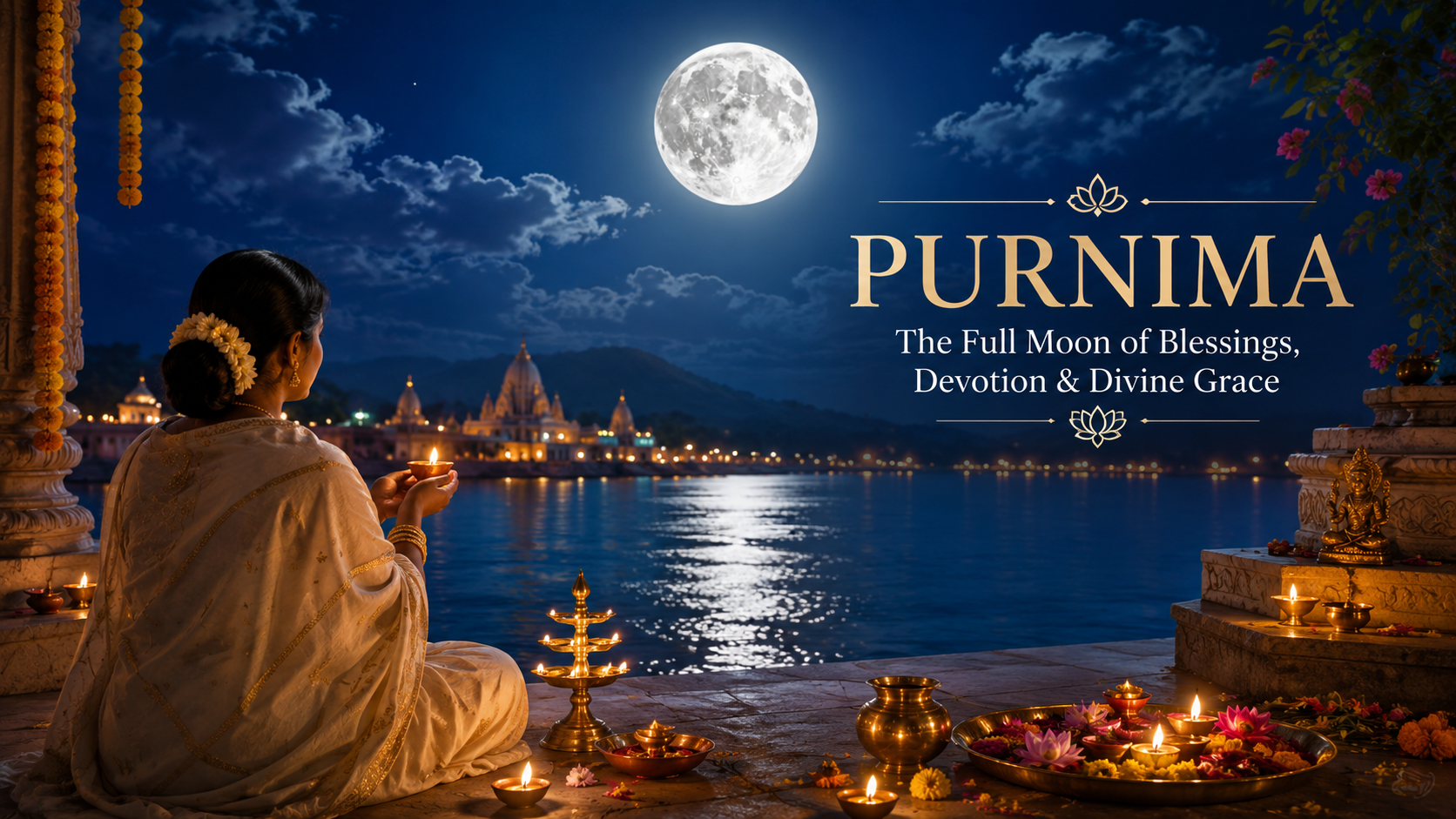
In the vast tapestry of Hindu traditions, Purnima — the full moon day — holds a uniquely sacred place. Occurring once every lunar month, Purnima is considered one of the most spiritually potent days in the Hindu calendar. It is a time when the moon is at its brightest and fullest, symbolizing purity, completeness, and the divine illumination of the soul.
What is Purnima?
The word "Purnima" is derived from the Sanskrit root "Purna", meaning full or complete. It marks the fifteenth day of the lunar fortnight (Shukla Paksha), when the moon is fully illuminated. This day is believed to be highly auspicious for worship, fasting, and spiritual practices, as the moon's energy is said to be at its peak, influencing the mind, body, and soul.
Each Purnima is associated with different deities and festivals, but the overarching theme remains the same: celebrating abundance, gratitude, and spiritual illumination.
Spiritual Significance of Purnima
1. Symbol of Completeness and Abundance
The full moon represents Purnatva — completeness. Just as the moon reaches its fullest form on Purnima, this day is considered ideal for manifesting desires, fulfilling vows, and receiving divine blessings. It is believed that any spiritual practice performed on this day yields multiplied results.
2. A Day for Fasting and Penance
Many devotees observe a fast on Purnima, known as Purnima Vrat. This fast is dedicated to Lord Vishnu, Lady Lakshmi, or other chosen deities. Fasting on this day is believed to purify the body and mind, detoxify the system, and bring peace and prosperity.
3. Auspicious for New Beginnings
Purnima is considered an ideal day to begin new ventures, spiritual practices, or rituals. The luminous energy of the full moon is said to clear obstacles and infuse new projects with positive vibrations.
Major Purnima Festivals in Hinduism
Throughout the year, several Purnimas hold special significance:
- Sharad Purnima – The most significant full moon, associated with Lord Krishna's Raas Leela and Goddess Lakshmi's descent to Earth.
- Kartik Purnima – Dedicated to Lord Shiva and Guru Nanak Dev Ji, celebrated with deep gratitude and charity.
- Vaishakha Purnima (Buddha Purnima) – Marks the birth, enlightenment, and death of Lord Buddha.
- Guru Purnima – A day to honor spiritual teachers (Gurus) who guide disciples on the path of wisdom.
- Phalguna Purnima (Holika Dahan) – Precedes Holi, symbolizing the victory of good over evil.
Purnima Rituals and Practices
Moon Bathing (Chandra Snan)
Taking a ritual bath under the moonlight on Purnima is believed to absorb the moon's cooling and calming energies. Many devotees also offer prayers to Chandra Dev (the Moon God) after bathing.
Charity and Donation
Giving donations on Purnima is considered highly meritorious. Devotees donate food, clothes, and money to the needy, believing that the divine blesses their generosity manifold on this day.
Special Pujas and Aarti
Performing Lord Vishnu or Goddess Lakshmi puja on Purnima is common. Homes and temples are decorated with flowers, diyas, and rangolis. Devotees chant mantras, sing devotional songs, and offer prasad to seek the moon's blessings.
Satyanarayan Vrat
One of the most popular vows associated with Purnima is the Satyanarayan Vrat. This ritual involves fasting, reciting the Satyanarayan Katha, and offering prayers to Lord Vishnu in his Satyanarayan form. It is performed to fulfill wishes, remove obstacles, and invite prosperity into the family.
The Moon's Influence on the Mind
In yogic and Ayurvedic traditions, the moon is closely linked to the mind and emotions. The full moon's energy is said to calm the mind, balance emotions, and enhance intuition. This is why meditation and spiritual practices on Purnima are considered especially powerful.
Ancient texts describe the moon as the ruler of the mind (Manas). On Purnima, when the moon is at its brightest, the mind is naturally more receptive to positive thoughts, making it easier to practice mindfulness and concentration.
Purnima in Modern Life
While the traditional practices may vary, the essence of Purnima remains timeless. In today's fast-paced world, Purnima serves as a monthly reminder to pause, reflect, and reconnect with our inner selves.
Whether it is observing a simple fast, donating to those in need, or spending a few minutes in silent meditation under the moonlight, Purnima offers a beautiful opportunity to realign with our spiritual core.
Conclusion
Purnima is more than just a full moon — it is a celebration of completeness, light, and divine grace. It reminds us that just as the moon waxes and wanes, life too has its cycles, and every ending brings a new beginning. By honoring Purnima through rituals, fasting, and devotion, we invite abundance, peace, and spiritual illumination into our lives.
May the gentle light of Purnima guide you toward inner peace and prosperity.